Neuroprojection
An ongoing body of work exploring what becomes possible when internal mental states are made visible in shared space. Using consumer EEG technology and real-time generative visuals, the work translates a meditator's brainwave activity into projected environments that a room full of people can witness simultaneously.
Visualizations
These visualizations use the Muse EEG headset, a consumer device which has been validated in clinical settings to measure brainwave activity in real time. The algorithmic interpretation of that data however has not been clinically validated and is not without its issues and edge cases. The audience feedback has been positive and given the impression that this approach is on the right track but that is still only anecdotal. A neuroscience advisor is being brought on specifically to interrogate and improve the signal logic. That process of refinement is an ongoing part of the development.
Neuroaurora makes mindfulness meditation visible to others in real time. The display gives the meditator external confirmation of something they could previously only sense internally, while the audience gains access to something that has always been invisible. The exchange between the two is where the experience becomes complete.
In this session the meditator is working toward something, and the audience can see whether they are getting there or not. The challenge is to reach the state without craving it and remain present without grasping for the result or pushing away distraction rather than let it pass. Unlike most things performed in front of an audience, it cannot be faked. The display is indifferent to effort and expression. Either the mind stills or it doesn't.
Artist Statement
Human consciousness is already legible to others through speech, behaviour, and social interaction. Neuroprojection aims to strip those learned layers back and offering a different kind of signal, not unmediated but less rehearsed. The translation is still an interpretation shaped by technology and aesthetic choice. But the question it poses is direct. What changes when our invisible experience becomes something you can watch?
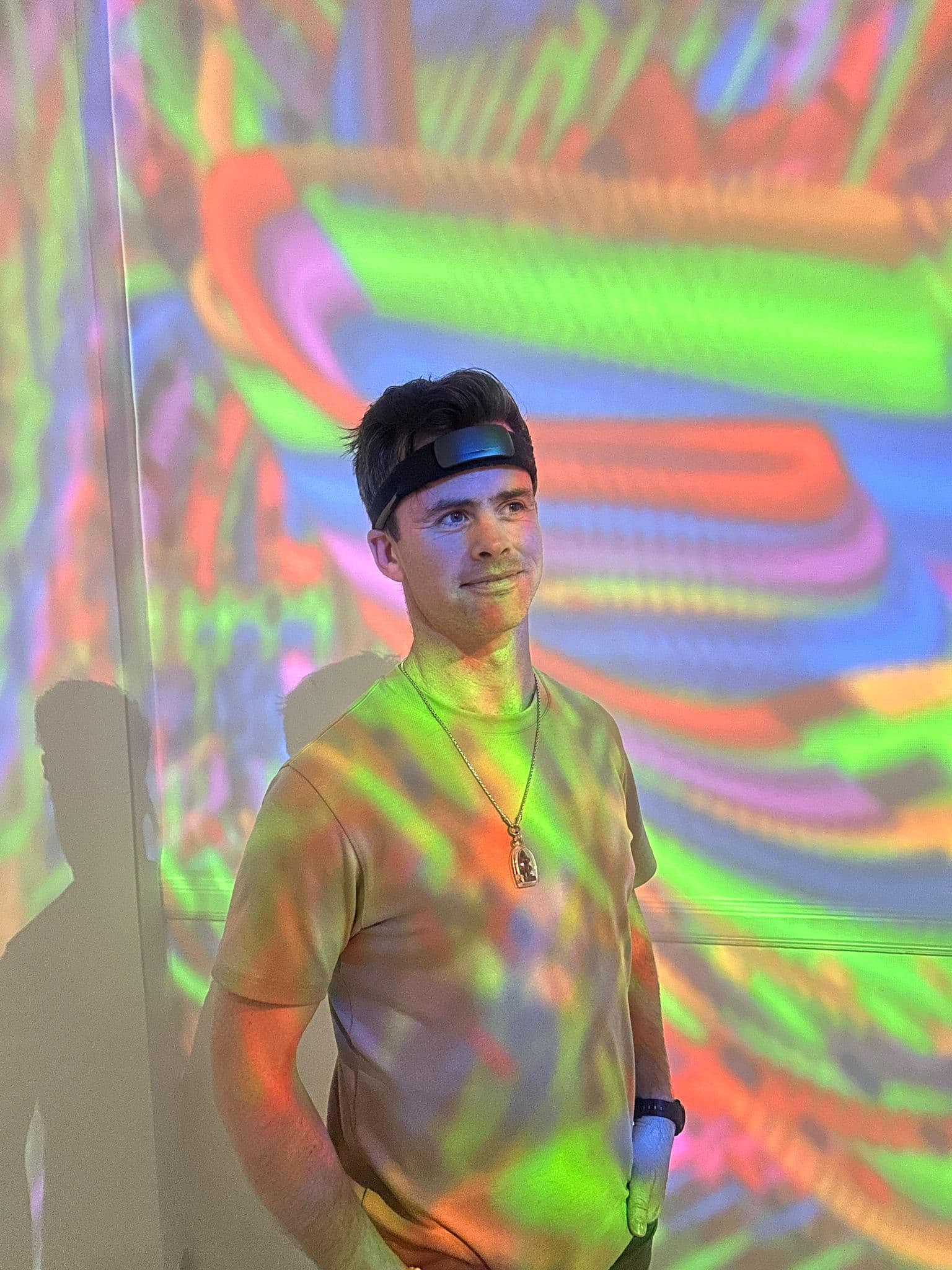
This work is not a conclusion but a contribution to an ongoing conversation about neurotechnology, perception, and shared experience. What that conversation looks like and where it will lead is still being discovered.
Attend a session
Get notified about future events and public sessions.